


Bernadette_Abraham
-

Hi @Kkol sorry to hear about your wife’s knee injury.
I would recommend you book an appointment to see Dr. Suad Trebinjac at HMS Al Garhood Private Hospital. 04-454-5000. He’s in Dubai on Sundays only. He’s a sports doctor that can hopefully recommend the appropriate treatment for her.
He helped me eliminate my chronic neck pain with prolotherapy injections. I’m not saying this is what your wife needs, but it’s one of the many different therapies in his toolkit. Very caring and knowledgeable doctor.
-
Hi @DXB – can you please clarify a few things.
- Are you looking for a water pitcher similar to a Brita (but obviously a better quality) that you can pack in your suitcase and bring back with you?
- Is it your home or renting a place? I’m asking because I’m wondering if you’d like to invest in something like a Berkey and leave it there after you leave?
- How many people are you? What size pitcher or countertop filter will you need?
- Do you want a larger counter-top for a family/house or something like a portable filtered water bottle for on-the-go use.
There are many options so once I understand your vacation situation better, I can help make a better recommendation.
-
Bernadette_Abraham
August 27, 2025 at 2:04 pm in reply to: Restricted diet- Snack and meal ideas please!Hi @Rania – I know it can feel overwhelming and very restrictive when you’re trying to follow several dietary restrictions at once.
So let me share a framework and resource to help you build your own meal plans based on what you CAN have, instead of everything you have to avoid. This makes it feel more doable, and you’ll feel relieved to see the number of options still available.
So #1 – think VPF+C as the guiding meal-building principle. Here’s a refresher lesson if you need it. This ensures that you’re still bringing on board the major macro nutrients despite all the restrictions.
2. Build your VPF+C meals and snacks from these “allowed” foods below (I suggest you print them out and keep on the fridge until you get the hang of it):
V — Vegetables
Zucchini, carrots, cucumber, bell peppers, green beans, lettuce (romaine, butterhead), arugula; bok choy, napa/green cabbage, kale; chives, scallion green tops, leek greens; parsnip, turnip, rutabaga, kohlrabi; broccoli florets*, celery sticks*, pumpkin/winter squash*. *Keep FODMAP portions modest.P — Proteins
Fresh chicken, turkey; fresh beef, pork, lamb (not aged); frozen-at-sea white fish (cod, pollock, haddock, sole, perch/trout). Eggs if tolerated. Avoid cured/processed meats, canned fish, shellfish; cook plain and freeze fast.F — Fats & flavor
Oils: extra-virgin olive, refined coconut, MCT, macadamia.Whole-food fats: olives, coconut cream/flakes (1–2 tbsp).
Seeds: pumpkin or hemp (1–2 tbsp).
Seasoning: sea salt, garlic-infused oil, parsley, basil, chives, thyme, oregano, ginger, turmeric. Skip vinegars/soy sauce; hold nuts except macadamias if sensitive.
C — Starchy Carbs (GF)
Rice (white, jasmine, basmati), rice noodles/crackers; quinoa, millet, buckwheat; potatoes (white/red) and small serves sweet potato; polenta/cornmeal, corn tortillas (GF); GF pasta blends; GF oats only if tolerated.For sweet cravings, choose these fruits in small amounts:
-
Blueberries (~¼–½ cup), grapes (½–1 cup), cantaloupe or honeydew (~¾ cup), dragon fruit (½–1 cup), passionfruit (1–2), pomegranate arils (2–3 tbsp), fresh cranberries (up to ¼ cup cooked), rhubarb (½–1 cup), starfruit (1 small; avoid with kidney issues).
-
Note: kiwi/raspberries/citrus/banana are flagged in SIGHI as problematic—trial later only if doing well.
3. Here’s how to put it all together:
-
Main meals (VPF+C): pick 1 Protein (size of fist) + 1–2 Veg (2 handfuls) + 1 Fat (a little goes a long way or more if you want to gain weight) + 1 Carb (depends on goals, but assuming you need to gain weight, 1-2 cupped hands for starters).
-
Mini-meals/snacks: combine P + C, F + C, or Fruit + P/F using only items above (e.g., chicken + rice cakes; rice cake + macadamia butter; blueberries + coconut flakes).
Additional tips:
-
Buy very fresh, cook plain, cool quickly, freeze within 1 hour, reheat from frozen; avoid leftovers >24h.
4. If this still feels overwhelming, then I can recommend the RealPlans.com website/app which provides recipes (with video instructions), meal plans, grocery lists and more, based on your dietary restrictions. They offer a 10-day refund guarantee if you’d like to try it.
We’re also happy to review your meal plan / snack list once you put it together based on your food preferences. Just upload it once done and we can provide feedback.
Hope this is helpful. Let me know if you need anything else.
-
-
Hi @naslam1603 – as far as I know, yes you can freeze tofu. But it will be chewier when you thaw and eat it after it’s been frozen. Also know that histamine builds up with time, so leftovers are often higher in histamine. Freezing stops histamine production, but the reheating may produce more.
And in general, soy tends to be one of the most common food sensitivities in people not because of histamine, but because of other biogenic amines or “liberator” effects.
You’ll have to test it out with a small amount to see if you can tolerate it.
-
Hi @Rania – welcome to B Better! Glad you’re here with us. And thank you for the detailed explanation of your current status.
First off – congratulations on being able to wean off of all of those antidepressant medications. That is no easy feat! And you’re almost free from all of them! They are monster drugs – I won’t sugar coat it. And even the makers of these drugs say that they weren’t created for patients to be on them for years at a time! So I just want to start off by honoring the hard work that you’ve already put in to get off almost all of them after 17 years!
Your approach does sound logical, and it seems you have a very good grasp of the priorities that need to be addressed, but your body always knows best and should dictate the next steps.
If I’m going to categorize the priorities at the moment, I would say nervous system work is priority #1, and in parallel, lots of gut healing therapies. The fact that slippery elm has been a positive experience just proves that your body is craving more soothing foods/therapeutics at the moment.
Given the recent bout of antibiotics, SIBO/IBS diagnosis and nutritional deficiencies, there is likely a lot of gut inflammation which is impacting both nutrient absorption and also the ability to produce DAO (an enzyme made in the gut lining/brush border that breaks down histamine). So with a dysregulated nervous system and a likely inflamed gut, supplements won’t be as effective.
While I agree that nutritional deficiencies should be addressed as another priority, the order in which you do so matters. At the moment, supplementing in the traditional sense may create reactions and absorption seems to be compromised.
So here’s what I would suggest:
1. Prioritize nervous system work: If you can afford to spend $179, I would recommend you purchase and go through my colleague’s course called Mast Cell Nervous System Reboot Masterclass. She was in your shoes too once – different circumstances, but similar sensitivities. https://mastcell360.com/mastcell-reboot/ This course teaches you ways to target the limbic system, parasympathetic system, vagal signaling and structuring. If you are in a constant flight or fight state, nothing else you do will really work. So this is absolutely priority #1. The body can only heal, digest, absorb, procreate, and thrive when it’s predominantly in a parasympathetic state. This is why the majority of the work needs to be placed here, every day, several times a day, to help rewire your brain to feel safe again.
2. Gut healing therapies: at the same time, please watch this lesson from our Gut Health Masterclass course for natural ways to help soothe the gut lining for at least 60 days before attempting to add in supplements again. Given your sensitivities to supplements, it would be best to focus on food therapies like:
- Raw organic cabbage juice, marshmallow root infusion (a tea that’s steeped overnight so it’s much stronger), and slippery elm daily.
- You could try fish and meat stock instead of bone broth, since these are lower in histamine but start with a small amount to test it out first, and increase gradually if tolerated. If that’s not well tolerated, then you can try collagen powder instead.
- Foods that are naturally gelatinous should also be included regularly as well, such as adding chia seeds to your bottle of water, having okra 1-2 x per week, fresh aloe scooped into a smoothie, and Irish sea moss gel (which by the way is also very rich in minerals!). Stewed apples are another gut friendly food thanks to pectin that’s released through the skin (I linked the recipe).
Let me know if you have any questions about how to make or source any of the above!
3. Rapid relief: given your constant anxious state, pain, and the fact that you’re almost done with weaning, I would encourage you to speak with your doctor about the possibility of introducing Tryptophan or 5-HTP to help your body produce more serotonin, our feel-good hormone. Serotonin is not only a neurotransmitter that helps with mood, but it also helps with pain perception, motility, sleep and craving control. Please read this handout on weaning off SSRIs to help you understand why these might be helpful with your case as you finish weaning off.
4. Address nutritional deficiencies (without supplements): until you work on #1 and 2, limiting the number of oral-based supplements is probably a wise strategy for reasons mentioned above. But that’s not to say that we can’t get creative and find other ways to “supplement”.
- For magnesium: consider an Epsom salt bath every night. This is a great way to relax and bring on board magnesium transdermally through the skin. Again, let me know if you need more instructions on how to do this. You can also try the homeopathic cell salt (Schussler brand) called Magnesium Phosphoricum. It melts under the tongue.
- For vitamin D: 10–30 minutes of mid-day sun exposure on a large surface area if tolerated. Otherwise, reduce the dosage of your current liquid vitamin D from 5K to 2K IU per day. If you’re low on magnesium, higher dose vitamin D could be further depleting that. So you could also hold off on vitamin D for at least 2 weeks while replenishing magnesium with Epsom salt baths and the cell salt.
- For iron & B12: I would encourage you to try small amounts of liver pâté daily. It can be spread on a dehydrated seed cracker for example or made into a meal like this recipe. This is the most absorbable and richest form of heme iron you can get, and can help bring on board these nutrients in a way that your body will hopefully accept. You could also add in the homeopathic cell salt called “Ferrum Phosphoricum”. This will help your body absorb iron at a cellular level.
I hope this provides you with some more direction, education, and action steps to support you through this final phase of weaning and healing.
-
Hi @naslam1603 – this is a very good question and unfortunately, no one has a clear-cut, clinically studied, and proven protocol for removing spike proteins (yet). I’ll touch more on this later…
First, just to clarify your labs: the test measured your Anti-SARS-CoV-2-S antibodies, not spike proteins themselves. These are spike antibodies (immune memory) showing that your immune system responded strongly to either past vaccination or infection.
High spike antibodies does NOT mean you have long COVID or persistent spike proteins. Long COVID is a clinical diagnosis based on ongoing symptoms (fatigue, brain fog, breathlessness, etc.) that persist beyond the initial infection.
So in your case, the high antibody level likely reflects a robust response to your vaccines (and possibly past infection), not a lingering virus or spike proteins.
Now back to the different protocols…
There are a lot of theories coming out, but more research is needed before we can claim effectiveness. Science moves slowly, so in the meantime, doctors are using “best reason” approaches and sharing anecdotal outcomes.
Dr. Peter McCullough and colleagues have proposed the Base Spike Detoxification (BSD) Protocol, which includes:
-
Nattokinase – 2,000 FU, 2x/day on an empty stomach
(a proteolytic enzyme thought to help degrade spike protein and dissolve fibrin) -
Bromelain – 500 mg, 1x/day on an empty stomach
(an enzyme from pineapple stems proposed to reduce clot-like formations and block spike binding at ACE2 receptors) -
Curcumin – 500 mg, 2–3x/day with food
(from turmeric, with strong anti-inflammatory effects)
Many people report feeling better with this protocol, but it hasn’t been researched in large clinical trials yet.
Another friend and colleague, Dr. Jill Crista, has experimented with nicotine patches, based on early research suggesting that nicotine can displace spike protein from ACE2 receptors (and possibly explaining why smokers were under-represented among hospitalized COVID patients).
She’s been successful using nicotine patches in her protocols for patients with Long Covid. You can read her first newsletter installment about it from 2023 HERE. Since then, she’s refined and added more to her protocol including L-theanine. For ongoing users, she’s using a ratio of ~100mg L-theanine per 2-3mg nicotine.
Hope this helps bring some perspective to this ongoing issue.
-
-
Hi @naslam1603 – the SIBO/IBS Relief Program is located under “Take Action”>”Programs”. The Gut Health Masterclass is under “Learn”>”Courses”.
The main difference between courses and programs is that programs guide you step by step to help resolve a specific symptom, whereas courses are open format so you can access all the lessons in any order, and are more generalized.
Here’s the direct link to the SIBO/IBS Program.
bbettermembership.com
B Better – Holistic Health & Wellness Community
Join B Better, a holistic health community offering expert advice, live Q&A sessions, and wellness resources. Start your free trial today and take charge of your well-being—no credit card required!
-
Hi @naslam1603 – great question. There is a lot of confusion around acidic vs. alkaline foods. I actually discuss this in the 10-Day Cleanse Program here (~3min 10sec mark).
To help you understand this better, please view this handout which shows various foods and whether they are alkalizing or more acid producing in the body once they are metabolized.
As you can see, the foods on the right hand side are foods that are classified as “acid producing” which has nothing to do with whether they are acidic when you swallow them or not. It’s about the dominant types of minerals in those foods and whether they present more chloride/sodium or more potassium/magnesium in the body AFTER they are digested and metabolized.
So even though lemon is acidic in nature when you swallow it, once it is metabolized, the minerals are more alkaline. Does that make sense?
Also note that neither lemon nor any other food can drastically change your blood pH. This remains tightly regulated between 7.3-7.45. What changes however is the urine pH, which reflects how the kidneys excrete acids or bases.
So lemon water doesn’t literally change your body’s pH to more alkaline, but its metabolic effect is considered to have an alkalizing function and shows up in urine. That’s the nuance and mistake most people make.
Now putting pH aside, lemon water has many other benefits if you can tolerate it. It helps you drink more water. It helps provide a small dose of vitamin C. It’s helps prevent calcium oxalate kidney stones (due to the citric acid). And if tolerated, it can offer mild digestive support by stimulating digestive secretions before meals.
So if it’s not bothering you on an empty stomach, I would encourage you to time it before meals so you can get the added digestive benefit. But if you notice that it’s starting to aggravate your condition, definitely avoid it.
Hope this helps.
bbettermembership.com
B Better – Holistic Health & Wellness Community
Join B Better, a holistic health community offering expert advice, live Q&A sessions, and wellness resources. Start your free trial today and take charge of your well-being—no credit card required!
-
Bernadette_Abraham
August 23, 2025 at 11:54 am in reply to: Recommendation needed – GastroenterologistHi @Szilvia – I know it’s been a while but I just recently came across a referral for a functional doctor who is also a general surgeon for digestive diseases.
Her name is Dr. Najat Amharar and she’s currently working at Burjeel Royal Hospital: https://burjeel.com/burjeelroyal/doctors/najat-amharar/
Not sure if you still need this information, but wanted to reply in case someone else comes across your thread in the future.
-
Bernadette_Abraham
August 29, 2025 at 7:17 pm in reply to: Restricted diet- Snack and meal ideas please!Hi @Rania – no, I don’t think these restrictions are adding fuel to the fire so to speak. On the contrary, given the gut inflammation from SIBO/IBS, there is likely enhanced intestinal permeability (aka “leaky gut”) and reduced enzyme production from the brush border lining. This can lead to food sensitivities and a hypervigilant immune state (which can explain the palpitations after eating certain foods).
Therefore, removing possible sensitivities will actually help calm the immune system and give it a much deserved vacation. Keep in mind that these eliminations are usually temporary and for a specific reason and goal. The goal right now is to reduce as much stress in the body as possible, which includes immune hypervigilance that is creating a physiological stress response.
Stress comes in many forms; mental/emotional, physical and physiological. Since nervous system regulation is your #1 priority, reducing all forms of stress (including physiological) will help towards your goal.
As for digestive rapid relief, you can try the bitter foods/teas, but they won’t be as potent as a liquid digestive bitter supplement. So try foods first, and if they aren’t enough, then consider the supplement forms instead.
-
Hi @DXB – actually, I’m NOT a fan of Brita at all. They are not NSF certified, which is what you want when looking for a filter brand. But it’s the most well known pitcher brand so I was simply using it as a reference to see what style of filter you’re looking for.
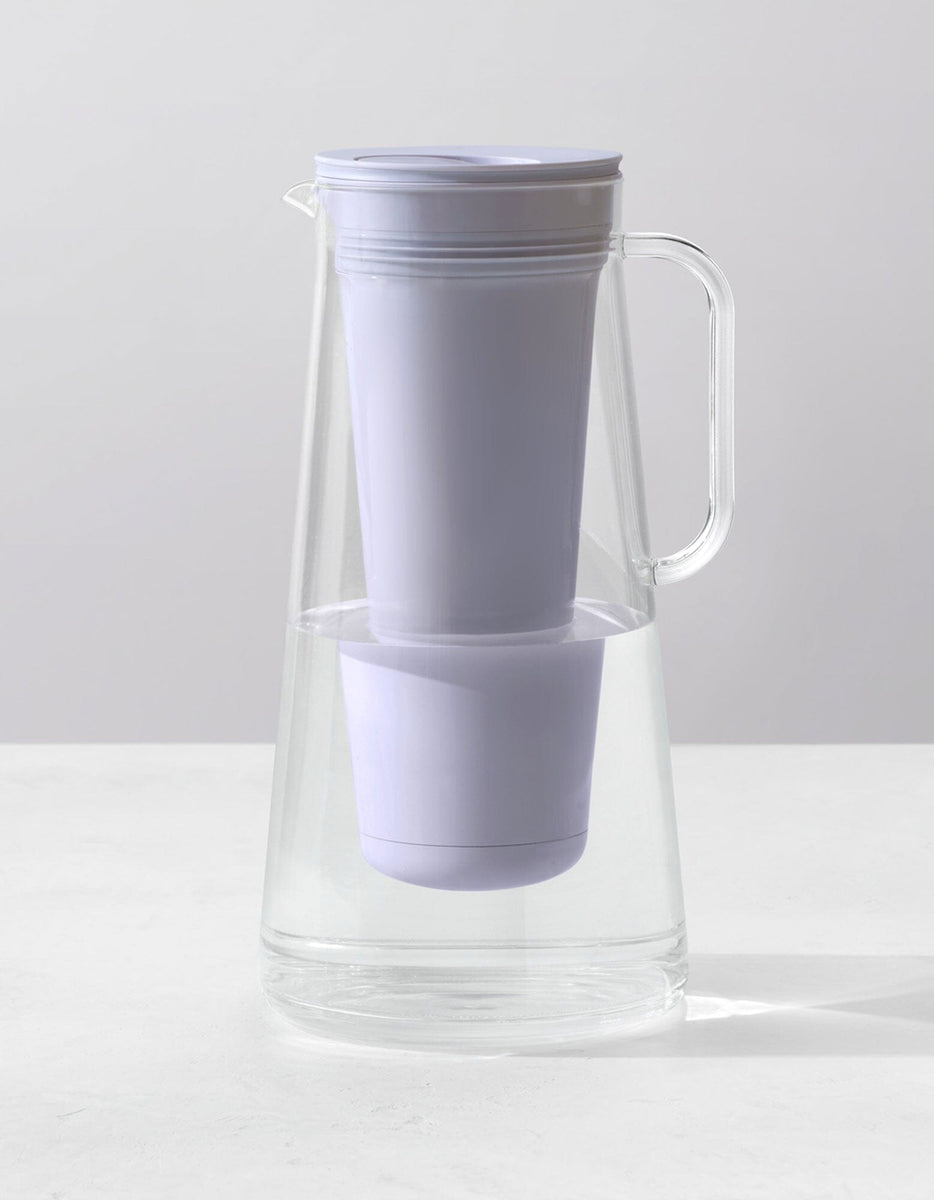
If you want a pitcher style similar to Brita (but obviously better quality), then checkout LifeStraw’s pitcher products (they come in 7 cup and 10 cup sizes). You can also take their quick quiz to figure out which model is best for your needs. They are NSF/ANSI 42, 53, 401 certified, and share their reports on their website. You can also compare their product filters to see the contaminants they remove. The pitcher filters remove quite a bit!
The Berkey is a great product. This is what we use in Canada when we travel in the summer. I purchased their additional fluoride filters too, and we just store it in a closet when we leave. Zero complaints and you can really taste the difference. It also comes in different sizes depending on the family size.
Hope this helps!
lifestraw.com
Custom-fit base for 10-cup Home pitchers. Prevents sliding while protecting surfaces. Dishwasher-safe convenience accessory.
-
Bernadette_Abraham
August 28, 2025 at 2:55 pm in reply to: Restricted diet- Snack and meal ideas please!Hi @Rania – it sounds like you might be experiencing food sensitivities. The inconsistency usually stems from the fact that it’s a delayed immune reaction unlike a food allergy which is immediate. Food sensitivities (to the same foods) can appear shortly after eating the offending food to several days later, which makes it very hard to track.
Keeping a food diary is a really good idea but it’s not always clear-cut as you’ve experienced. But definitely keep track and write down symptoms daily. You might start noticing a pattern.
As for controlling the digestive symptoms you experience after meals, you might want to consider something like Iberogast for rapid relief as needed, or digestive bitters to help support overall digestion such as Dr. Shade’s Bitters No 9 or Gaia Herbs’ Sweetish Bitters. See handout for bitter foods you can include too plus other brands.
-
@Rania thank you for sharing about B Better! 🙏
Sounds like a solid plan. Given your sensitivity to supplements, always check the “other ingredients” used. Cheaper forms often add fillers and additives that may aggravate you.
If you only have access to iHerb, then look at the Metabolic Maintenance brand. Their form of tryptophan also includes a small dose of vitamin B6 which is a good thing but it’s in the wrong form – I prefer that it would be the P5P form, and not the synthetic pyridoxine form. But it is free of additives and fillers, so that could be an option.
And not sure if this could reach you, but B Better members have access to various supplement dispensaries with better quality products. Here is one option from the Natural Dispensary in the UK which ships worldwide: https://naturaldispensary.co.uk/products/L_Tryptophan_220mg_90_s-5142-0.html – It’s also free of additives and fillers. It comes in a smaller bottle too.
You can checkout and sign-up to the different dispensaries here in “Take Action”> Supplements & Dispensaries: https://bbettermembership.com/supplements/
We’re also in conversation with iHerb to provide our members with a discount code. We’ll announce it in our Insider News by email & community forum once we have it.
For the cell salts, it’s 1 cell salt per day directly in the mouth. It melts like homeopathic pellets. Don’t touch it with your hands – same principle as the pellets.
-
Hi @Rania – I’m glad to hear that you’re diving into the resources and already feeling less overwhelmed. You made my day! 🙂 This is exactly what I want for you and ever other member. Please do spread the word about us if you feel called to sharing!
To answer your questions. I’ll reply to them 1 by 1 in the order you wrote them:
1. Layering vs. introducing foods one-by-one. Low and slow is always the best approach. Introducing 1 new food or supplement at a time for 2-3 days before introducing anything else new allows your body the time to adjust and also gives you time to see if you’ll have any negative reactions.
It’s not necessary to do all of them either. You can try them all and then stick to a few that feel best for you. Or rotate them. Start with a few for a month, then select another few for another month, etc. Many of my clients do well with a combination of daily marshmallow root/slippery elm infusions and cabbage juice only. Those that can’t stand the taste of cabbage juice choose something else. If stewed apples cause a histamine flare – then avoid that. You’ve got lots of options, so choose what is best for you. Listen to your body! It will guide you!
2. All of the gut healing foods are low FODMAP and low histamine, except for the stewed apples which are high FODMAP. Seamoss “may” trigger histamine in some people, but it’s generally considered low in histamine. A small amount of apple may be fine for some, but again, you have many options to choose from. You don’t need to try the stewed apples if you’re afraid it might cause histamine overload. We have guides for both low FODMAP and low histamine.
3. Okra. Keep it simple. Steam it until tender (~100g), drizzle some extra virgin olive oil, lemon juice, salt and pepper.
4. Magnesium oil is not the best form for replenishing a deficiency since it’s magnesium chloride. It’s great for acute situations like muscle cramps for example, and since it’s making you dizzy, just stop that form. You’ll get better absorption with an Epsom salt bath which is magnesium sulfate. You can start with a foot soak to see how you feel, and later try a full body soak for more absorption.
->Fill your bathtub with warm water and stir in about 2 cups of Epsom salt until dissolved, then soak for 15–20 minutes before rinsing off and hydrating with a glass of water. For a foot soak, use ½ cup in a basin instead.
In addition to the Epsom salt baths/foot soaks, you can also take Mag Phos at the same time. The cell salt helps get magnesium into cells better.
6. Iron & B12. Plain liver is absolutely fine – you’ll just have to find a recipe that you like because liver isn’t the best tasting food. The pâté recipe I shared is delicious and makes it enjoyable to take a small amount daily, but it does have butter so if you’re DF, that might not work. Regarding portion sizes, consuming 100g (3.5oz) of liver twice per week is a good sweet spot to help replenish iron stores without going overboard on vitamin A. It’s also rich in folate (B9), B12, copper and biotin. A true superfood. If you can get this in and tolerate it, you’ll be winning! Let us know! Oh and – adding in Ferrum Phos cell salt will also help get iron into cells better too.
7. No – I wouldn’t wait until you’re fully weaned off of your medication to look at adding in tryptophan or 5-HTP. In fact, I think now is the ideal time since you’re at the lowest dose. What happens when someone is on SSRIs for so many years is that the body starts to reduce its own internal production of serotonin. Supplementing with tryptophan or 5-HTP provides your body with raw material to produce serotonin, which will probably help you finally wean off of it with less anxiety, depression, etc. Did you get a chance to read the article I shared? It discusses recommended dosages to start with and explains the differences between tryptophan and 5-HTP.
8. Irish sea moss. I bought this one from Amazon, and make my own. It’s really easy. Rehydrate it by soaking it in water overnight. Rinse it well. Then I add 1 cup of water for 1 cup of sea moss (about a handful of dry sea moss), and blend. Store in a glass jar in the fridge – it’s jelly in consistency. You can also add a bit of maple syrup & cinnamon to flavor it if you don’t like it plain, but it’s very bland and not bad tasting all on its own. I’ll turn it into a recipe for our library this month. 🙂
9. I honestly would hold off on all supplements (except tryptophan or 5-HTP) until you’ve done a period of gut healing. Food therapy can be just as powerful and currently it seems that’s what your body is craving. Between sun exposure, Epsom salt baths/Mag Phos, and liver/Ferrum Phos – you’re covered! Also sea moss is rich in minerals. No supplement can complete with the amount of nutrients in whole foods.
Let me know if you have any other questions in the meantime.
Just reach out when you need it!
-
@Kkol so there can be many sources. If it’s from ungrounded outlets/plugs, hire an electrician to properly ground them.
Other common sources for dirty electricity are dimmer switches, fluorescent/LED bulbs, smart meters, and power supplies (like chargers).
So reduce these sources. Replace dimmer switches with regular on/off switches. Use incandescent or high-quality LED bulbs without drivers that cause spikes. These bulbs are usually marketed as low-EMI, flicker-free, or clean power LEDs.
Unplug electronics and appliances that aren’t in use. Turn off routers at night, etc. Treadmills produce a lot of dirty electricity by the way, so unplug it when not in use if you have one.
If there’s a smart meter close to the house, request an analog meter or shield the smart meter.
You can also look at getting special plug-in filters to “short out” or absorb the high-frequency noise, such as the Greenwave. Place it where there’s highest dirty electricity (like the plug for the fridge for example).
You can also ask an electrician to install whole-house dirty electricity filters at your breaker panel.
If you’re unsure where to start, you can always hire a building biologist to come in to assess your home and find specific solutions for your home’s needs. In B Better, I interviewed Valentina all about home health. You can watch that session here.
Hope this helps.
My Profile
Bernadette_Abraham
Hello everyone! I'm here to help support your health journey any way I can.
My Location & Socials
United Arab Emirates
(UTC+04:00) Abu Dhabi, Muscat
Upcoming Events
-
27 Nov
-
13 DecLive Q&A Call6:00 pm - 7:00 pm
-
08 JanLive Q&A Call10:00 am - 11:00 am